
Wyoming County Criminal Court Records
A criminal court record is the court's case file, not just the first accusation. In Wyoming County, police and Pennsylvania State Police generally investigate crimes and file criminal complaints with the proper Magisterial District Court. A copy goes to the Wyoming County District Attorney, which prosecutes the case. If the matter is held for court, the Court of Common Pleas and Clerk of Courts track the later criminal case file.
The Wyoming County District Attorney page describes the local prosecution role and the types of matters the DA can and cannot handle.
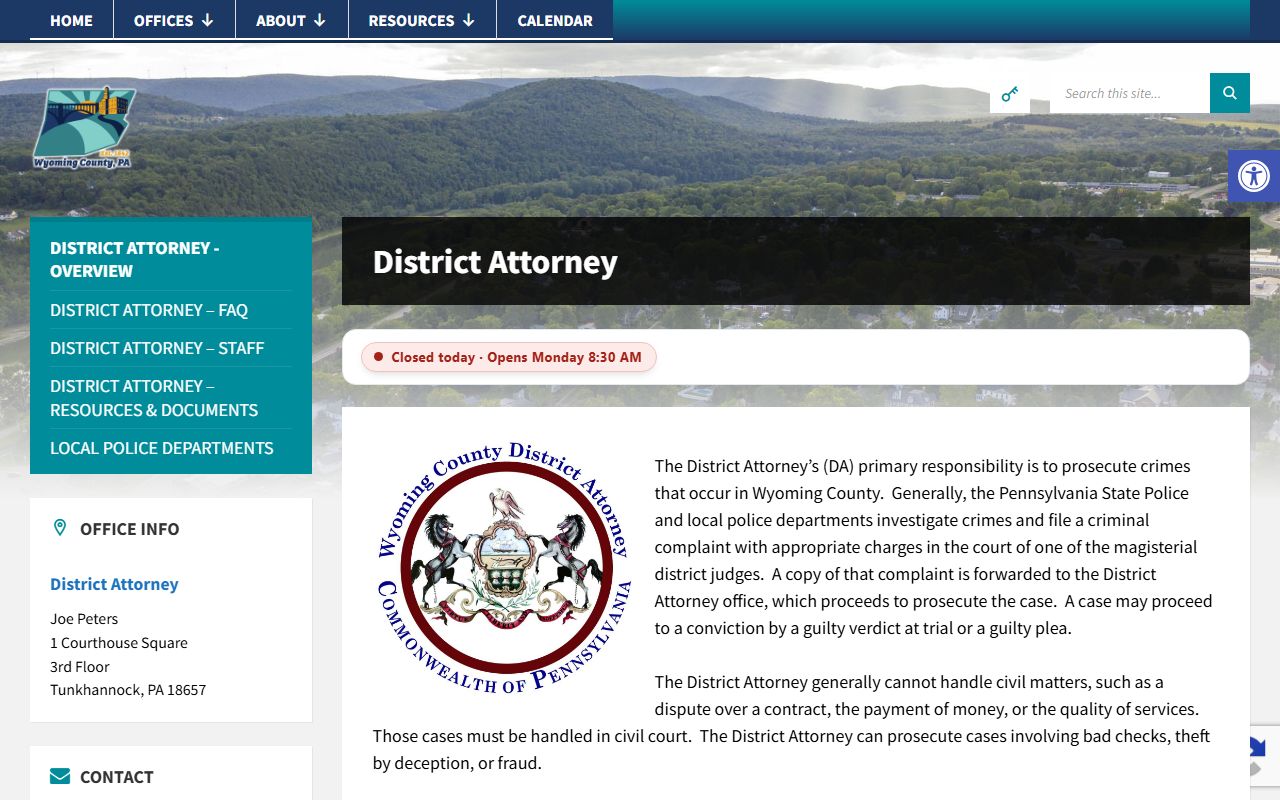
The DA source helps separate the court case record from civil disputes, police reports, and jail custody records.
Search Wyoming County Criminal Court Records
Public criminal docket lookup starts with UJS Case Search. Search by participant name, docket number, OTN, complaint number, incident number, SID, or other available identifiers. The result may show Magisterial District Court entries, Common Pleas criminal docket sheets, charge rows, hearing dates, financial obligations, disposition, and sentencing details.
- Open UJS Case Search and choose participant name, docket number, OTN, complaint number, incident number, or SID.
- Filter to Wyoming County when the form allows it.
- Check whether the case is at Magisterial District Court or Court of Common Pleas.
- Review charges, event history, plea entries, disposition rows, sentence details, costs, restitution, and appeal entries.
- Request certified copies or complete file material from the Clerk of Courts when the docket sheet is not enough.
UJS warns that recent filing-office entries may not immediately appear online. It also warns that a docket sheet should not replace a criminal-history background check from the Pennsylvania State Police. For broad public access to criminal-history record information, Pennsylvania law is controlled by 18 Pa.C.S. Chapter 91.
The criminal history record information statute is the state-level source for dissemination, expungement, juvenile records, and limited access.
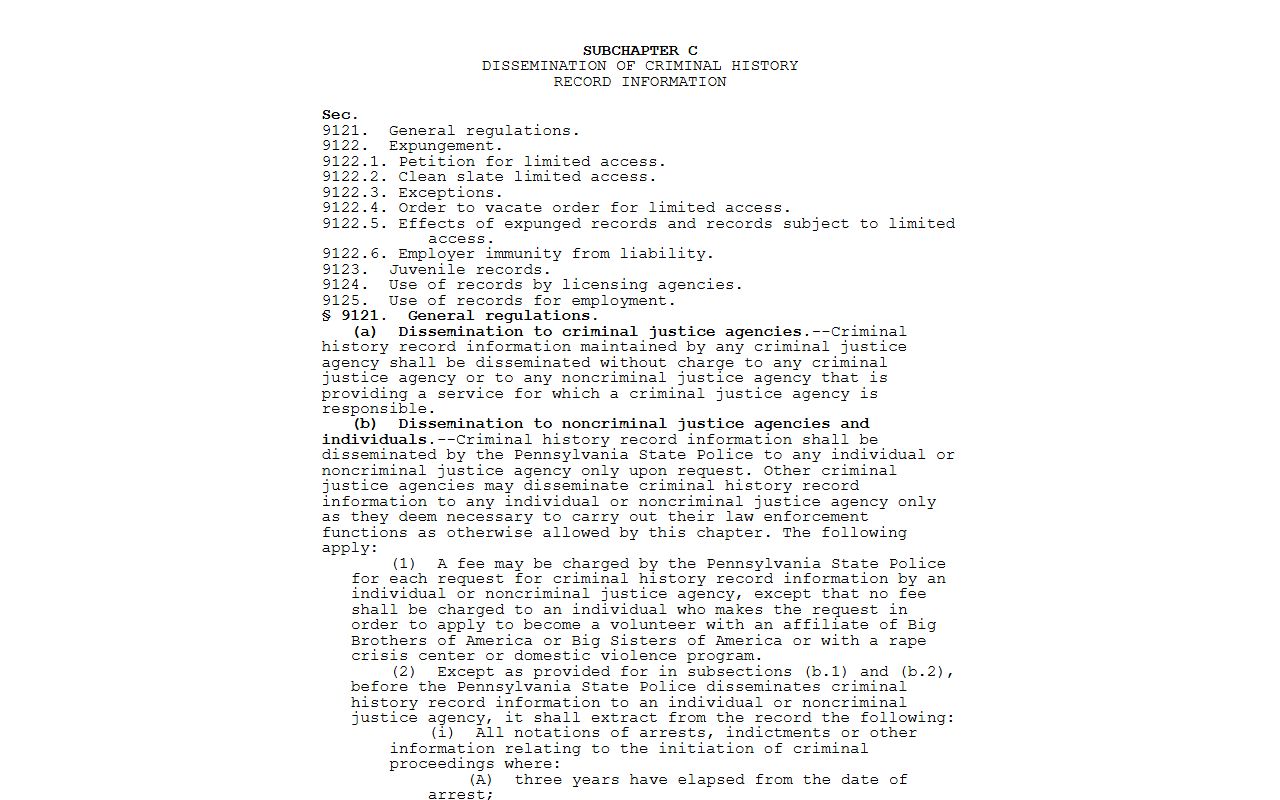
That statute is separate from a UJS docket search, so the two tools should not be treated as the same record.
Wyoming County Criminal Case Flow
Criminal court records change as a case moves from accusation to outcome. A complaint may begin at the Magisterial District Court level. Preliminary proceedings determine whether charges go forward. If charges are held for court, the Common Pleas criminal docket becomes the main case record for arraignment, motions, plea, trial, disposition, sentence, and appeal activity.
Case flow: Charges Filed › Preliminary Proceedings › Arraignment › Pretrial and Motions › Plea or Trial › Disposition › Sentencing.
| Stage | What the Record May Show |
|---|---|
| Complaint and Preliminary Hearing | Police complaint, complaint number, MDJ events, OTN, bail status, and whether charges were held for court. |
| Arraignment | Common Pleas case opening, defendant appearance, counsel, and plea-related scheduling. |
| Pretrial and Motions | Continuances, motions, orders, conferences, and notices. |
| Plea or Trial | Guilty plea, ARD, verdict, dismissal, or other disposition activity. |
| Sentencing | Sentence, probation, fines, costs, restitution, and appeal deadlines when public. |
The Wyoming County DA FAQ gives local timing and outcome context for criminal prosecutions.
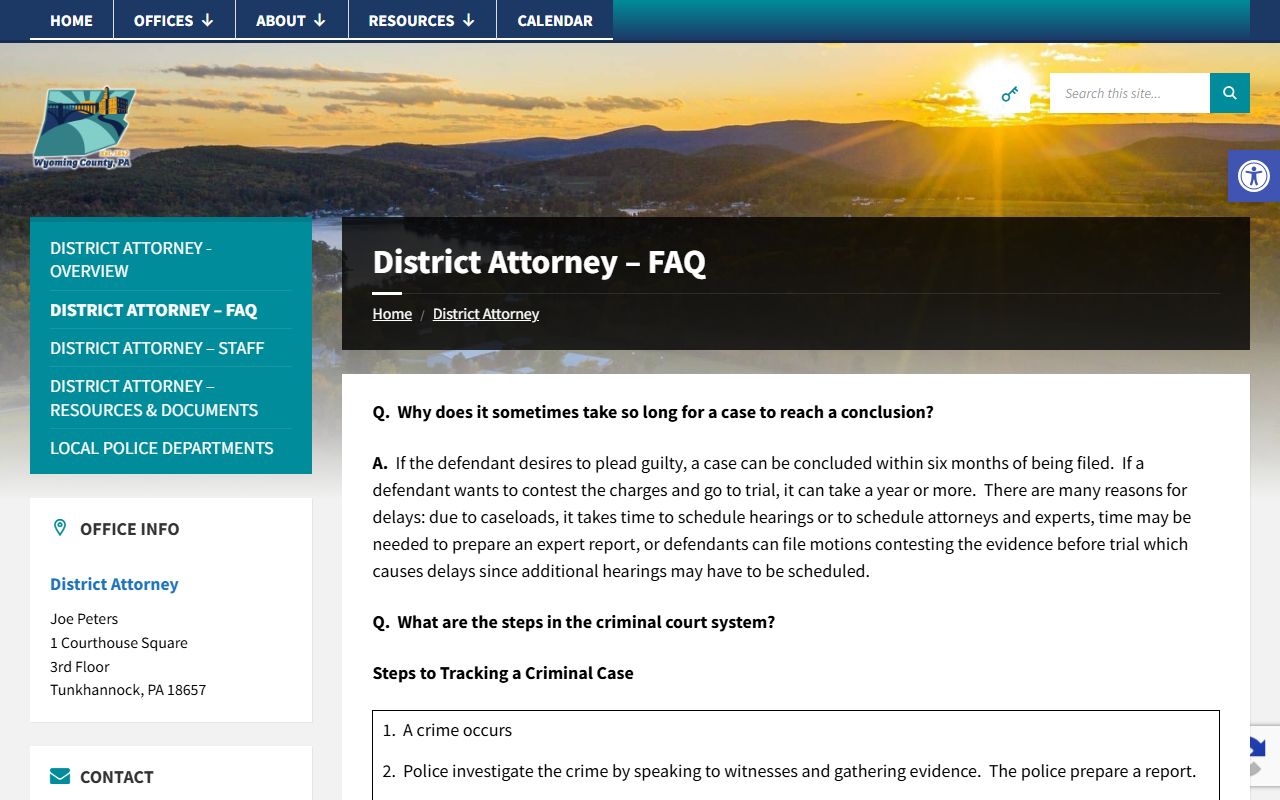
That FAQ notes that guilty pleas and ARD resolve a large share of local cases, while contested cases can take longer.
What Wyoming County Criminal Records Show
A Wyoming County criminal court record can contain both case-level and charge-level information. The docket may show docket number, court level, defendant name, attorney, filing date, case status, OTN, complaint number, incident number, SID, charge description, grading, disposition, event schedule, financial obligations, restitution, probation, sentence, and appeals. Public results may omit sealed, juvenile, confidential, or newly filed entries.
| Field | What It Shows |
|---|---|
| Docket Number | The court case identifier for UJS and clerk lookup. |
| Defendant | The accused person, when the record is public. |
| Charges | Offense name, grading, statute reference, and status when entered. |
| Events | Hearings, arraignment, motions, conferences, trial dates, and sentencing events. |
| Plea or Verdict | Whether a charge resolved by guilty plea, trial verdict, dismissal, ARD, or other action. |
| Sentence | Penalty, probation, fines, costs, restitution, or other court-ordered terms when public. |
Charges vs Convictions
A charge is an accusation. A conviction is a final result after a guilty plea or guilty verdict. Wyoming County criminal court records can show charges that were amended, reduced, dismissed, withdrawn, or ended in nolle prosequi. That is why charge rows must be read with the disposition and sentence sections, not in isolation.
| Point | Charge | Conviction |
|---|---|---|
| Meaning | Filed accusation after investigation or arrest. | Finding of guilt by plea or verdict. |
| Where It Appears | Complaint, MDJ docket, Common Pleas docket, and charge rows. | Disposition and sentence rows. |
| Record Risk | May remain visible even if later dismissed unless restricted by law or order. | Can affect sentencing, supervision, fines, restitution, and criminal-history reporting. |
For a closer look at the accusation side, use the Wyoming County arrest records and court charges page.
Wyoming County DA Case Context
The DA FAQ gives unusually specific local context. It reports about 400 adult criminal cases each year, 30 to 50 juvenile cases, 20 to 30 summary appeals, 5 domestic support de novo hearings, 10 to 15 PFA violations, 5 to 10 PCRA hearings, and 5 to 10 Superior Court appeals. It states that about 85 to 90 percent of cases resolve through guilty pleas or ARD. It also identifies DUI as the single most common crime in Wyoming County, and says many burglary, theft, and other property crimes are drug related.
The Wyoming County DA staff page identifies District Attorney Joseph C. Peters and staff involved in criminal prosecution.
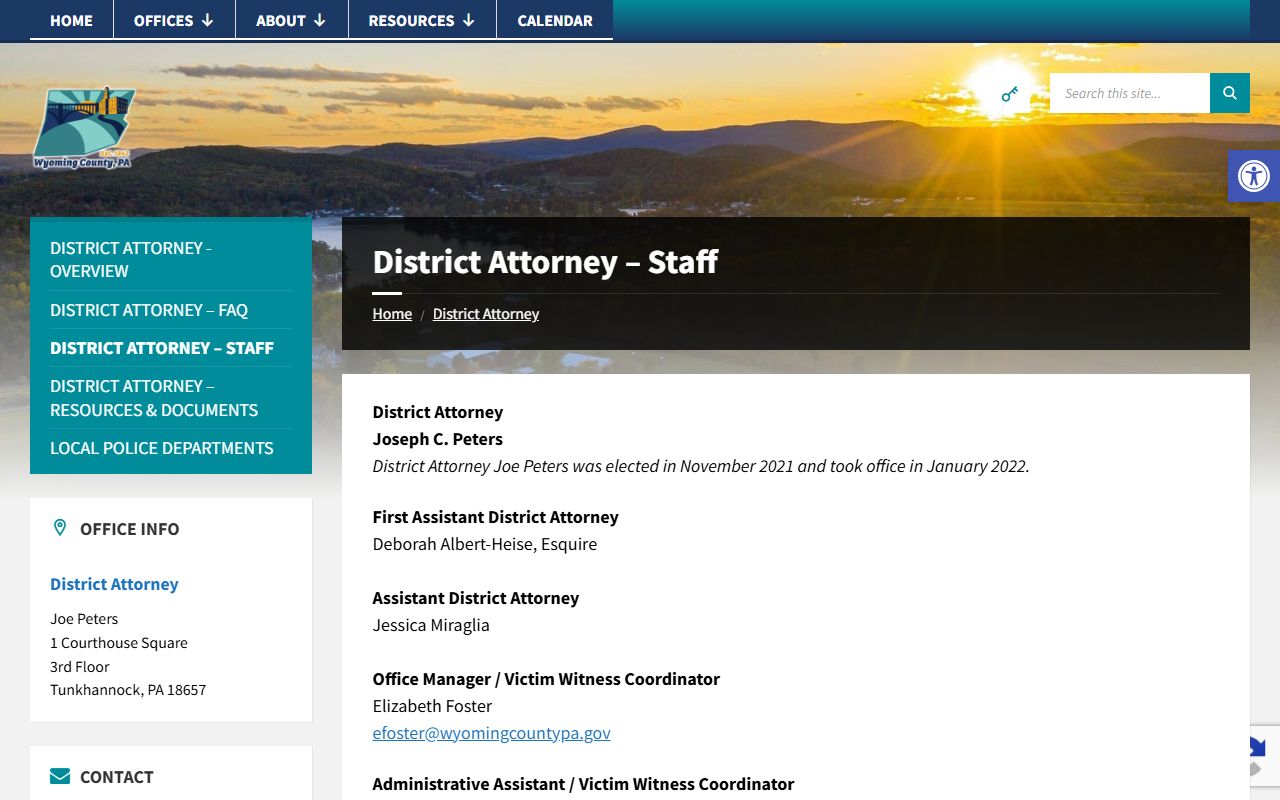
The staff source ties public criminal case records back to the local prosecution office named in the court process.
The District Attorney directory entry lists the courthouse office for Wyoming County criminal prosecution questions.
Case-specific legal requests still belong with the court, an attorney, or the proper official office, not a general docket search.
Sealed vs Expunged Criminal Records
Public criminal access is limited by the UJS public-access policy, juvenile rules, sealing orders, expungement law, and limited-access provisions in 18 Pa.C.S. Chapter 91. The DA FAQ describes ARD as a program for first-time offenders or people with minimal prior records. If a defendant completes ARD and its requirements, the person can petition to dismiss and expunge the charges.
| Point | Sealed or Limited Access | Expunged |
|---|---|---|
| Public View | Restricted from ordinary public access, while some official users may retain access. | Removed or destroyed under statute or court order where eligible. |
| Common Sources | Clean Slate, limited-access rules, court sealing order, or confidentiality rule. | 18 Pa.C.S. Section 9122, ARD completion, or other qualifying court order. |
| Practical Step | Confirm eligibility and docket details before filing. | File the proper petition in the court that handled the case. |
Note: Juvenile petitions, adoption matters, and sealed records should not be treated as ordinary public criminal docket material.
Criminal Records and Custody Limits
Criminal court records may show bail, sentence, probation, or incarceration terms, but they are not a jail roster. The Wyoming County Correctional Facility holds pretrial and post-trial detainees as ordered by the courts, and no official public online Wyoming County jail roster was located in the county sources. Current custody questions use the correctional facility, court docket status, VINELink where applicable, or the Pennsylvania DOC locator for state-sentenced inmates and parolees.
The Correctional Facility programs and services page documents jail programs, health screening, GED, religious services, literacy, and care-pack information.
That facility source is useful context, but the criminal court record remains the court case file and not the custody roster.